
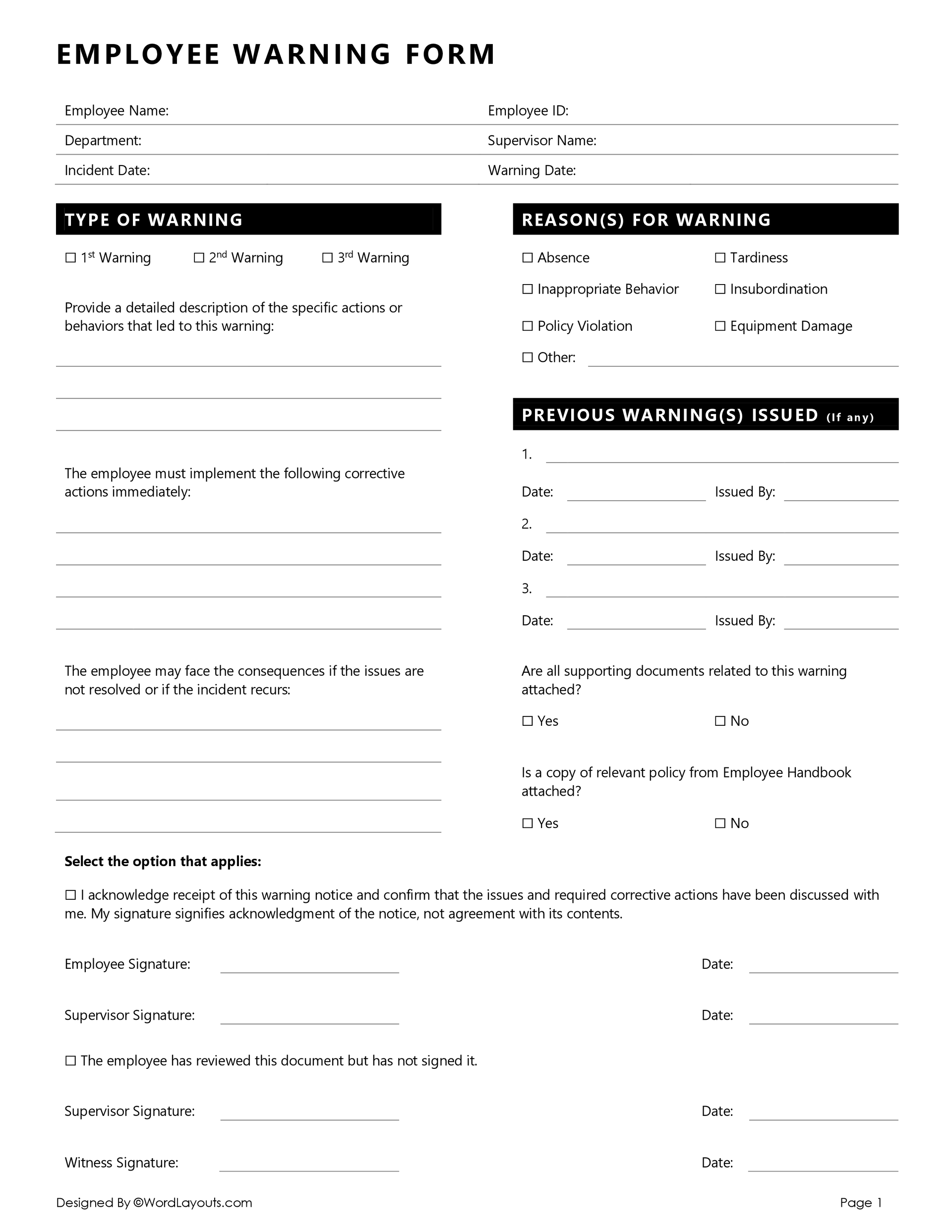



In this post, we explore the nuances of employee warning notice forms, their significance, and how to use them successfully to preserve productivity and organizational harmony. We also introduce you to our 100% editable employee warning form (warning letter) template that you can download right NOW for free!
A bare level of discipline is key to winning as a team and keeping up with organizational standards. Without a disciplinary process, you might land yourself in chaos, where key deadlines are missed, work cultures turn toxic, and productivity levels fall well below the standard you set.
Whether it’s a case of bad behavior, poor performance, or a breach of company policy, a warning letter acts as a documented record of correspondence between an employer and the employee. If employees do something to break the peace, the first step is to issue a verbal warning. If that doesn’t work, you need a formal, written warning to warn employees about what they are doing wrong and what happens should they fail to mend their ways.
Our Warning Notice template can help you do all that and more. Use it to identify specific problems, corrective actions, and the possible repercussions for the employee should a problem continue. A form like this is usually filed by a member of HR, or, excepting that, anyone in a supervisory or managerial role in your company.
Typically, three formal warnings are issued in most organizations, followed by disciplinary action in the form of a PIP, demotion, or termination notice. In case of severe violations, HR can directly proceed with a final warning or immediate termination as per company policies.
Employee Warning Forms also go by:
- Letter of Reprimand
- Disciplinary Form
- Caution Letter
- Performance Improvement Notice
- Corrective Action Letter
- Behavioral Warning
- Employee Performance Notice
- Conduct Warning
- Notice of Concern
- Compliance Reminder
A typical Warning Form asks you for the following:
- Who is the warning being issued to?
- When was the warning issued?
- What actions led to the warning?
- Were similar warnings issued to the employee in the past?
- What corrective actions should the employee take?
- What legal consequences will the employee face should they fail to comply?
Now, let’s explore our print-ready, fillable template in a bit more detail.
Overview
When filling out this notice form, make sure you have the employee’s legalname and the department they work for.
You will also need to add the Employee ID (if applicable) to make sure all communications are easily added to the employee’s personnel file.
Now, identify the date when the incident occurred. For example, if you are dealing with excessive absenteeism, you will need to specify all the dates when the employee was absent without a good reason.
Also, add the date when a warning was first issued in a formal way. It is important to take prompt action and issue a warning as soon as possible after the incident occurs. A delayed warning can delay corrective action, allowing memories of an incident to fade or change over time.
Type of Warning
Now, let’s get down to the specifics of what the ado is all about.
Use the checkboxes to mark if this is the 1st, 2nd, or 3rd time a warning of this nature is being given. Most US companies have a three-time warning policy, and this is reflected in our template.
Incident Details
In the next subsection, you unravel the mystery of what happened!
Once you have a detailed account of actions that form the factual basis of the warning, all parties have a clear understanding of which specific issue or behavior is being referred to. This creates a clear basis of communication between the person responsible for said behavior and the managers who find an objection to it.
Set out the problem clearly and with as much detail as possible. For example, if a written company manual was violated, include a reference to the rule that was violated.
Corrective Action Plan
Direct the employee toward a corrective action plan. This plan is a list of concrete actions they must take (or refrain from taking) to prevent a similar episode from happening in the future.
Disciplinary Consequences
Lastly, inform the employee of the consequences they’ll face should if fail to change their ways. These consequences take the form of disciplinary actions, such as salary cuts or termination of employment, as imposed by the HR department or company manager.
Reason for Warning
A warning letter can be issued for multiple reasons; from lack of punctuality to violations of company policy – here are some common grounds for the issuance of a formal warning:
- Absence: Excessive absenteeism can affect your company’s ability to meet deadlines by disrupting the flow of communication and collaboration within the team. This can result in a laid-back & unproductive work culture.
- Tardiness: While it’s understandable for an employee to run late for work now & then, if this becomes a habit, it can affect your team morale by creating a sense of frustration among employees who are punctual.
- Inappropriate Behaviour: This is probably the widest category in our form, covering anything from the use of foul language and bullying to misrepresenting facts or misusing company funds.
- Insubordination: Companies thrive when there is a clear line of command. If one of your employees steps out of line by blatantly defying instructions from someone higher up, it can undermine the company’s leadership and disrupt workflow.
- Policy Violation: Every company has its own set of policies and procedures to live by. These are usually found in your employee handbook or your employment contract. Breach of these can lead to a written warning or even immediate termination, depending on the issue and policy in question.
- Equipment Damage: Wilfully damaging, losing or neglecting company-owned assets is a common ground for warning notices. For most companies, these include laptops, Employee ID cards, access keys, or any external storage such as hard drives where company data is stored.
By addressing these issues promptly, employers can help create a safe and respectful work environment in the short-run. In the long-run, it helps them reduce turnover rates for the company while holding their employees accountable to certain professional and ethical standards.
Previous Warnings
In most organizations, a formal, written warning is typically issued after an employee has received a verbal warning, usually from their direct supervisor or line manager, in a more informal setting.
While some organizations take a more liberal approach, offering multiple warnings before taking any strict action, others might fire an employee after only one warning. Either way, it’s sensible to establish a clear policy for employee discipline that outlines a systematic series of warnings and consequences, and strictly adhere to this standard protocol for everyone!

To Sign or Not to Sign
As a rule of thumb, a warning letter doesn’t need to be signed by the employee to be considered valid & authentic. That said, it’s commonplace for both employee and employer to sign the document and acknowledge the warning. This dated & signed acknowledgment proves that the employee is aware of the warning and its contents. Plus, a signature prevents any future disputes about whether or not the warning was received during a disciplinary or legal proceeding.
If an employee refuses to sign, the warning can also be signed by a witness to prevent future allegations and confusion. A witness signature indicates that they have personally seen the employee receiving the written warning. In cases where things escalate to a point where the courts get involved, this information can be crucial.

Navigating the Law (For US-Based Companies)
Here’s a list of US laws that must be kept in mind when making an employee warning notice for your company:
- Title VII of the Civil Rights Act (1964)
- Americans with Disabilities Act (ADA) (1990)
- Age Discrimination in Employment Act (ADEA) (1967)
- Fair Labor Standards Act (FLSA)
- National Labor Relations Act (NLRA)
- Pregnancy Discrimination Act (PDA)
- Family and Medical Leave Act (FMLA)
- Health Insurance Portability and Accountability Act (HIPAA) – if health information is involved
We have a more detailed breakdown of these laws available here, in case you’d like to learn more about your legal and ethical responsibilities as an HR manager or professional.
Wrap Up
At the end of the day, a positive work culture is key to the success or growth of a business. Whether you’re a small start-up with less than a dozen workers or a big multinational with a staff of hundreds, you need a standardized way to notify your employees when they are out of line or harming company interests.
Lucky for you, an employee warning notice form serves the dual purpose of (a) creating documentation for the company should punishment or dismissal prove necessary and (b) defending your business in any lawsuits down the road. You can use this form as a supplement to our Employee Disciplinary Action Form to give the employee a formal warning before strict action is taken against them.
Use our free Warning Letter Template to issue warnings to employees who overstep the mark, so you can foster a culture of transparency, accountability and competency at the workplace!


