

If you are overweight, have food allergies or sensitivities, unhealthy eating habits, or just want to develop a healthy pattern of eating, then food journals can be ideal for you. Such journals help you keep a record of what you eat and drink. Knowing this exactly helps in controlling your eating and drinking habits. In one weight loss study of nearly 1,700 participants, those who kept daily food records lost twice as much weight as those who kept no records – Harvard Health.
Food diaries serve as an effective tracker for recording your consumption habits on a daily or weekly basis. These allow you to track meal times and sizes, including physical activities and medications. You can also write your health goals and notes for your meals.
What is a Food Diary?
Food diaries are a kind of tracker that assists you in documenting your eating behaviors, managing body weight, and healthy nutritional intake while promoting health and wellness.
It assists you to have a record of your daily diet and gives you an overview of your eating habits. To achieve that, you can either use food tracking apps or keep a log in food diary.
People use different names for food diaries, such as food journals, nutrition journals, meal planners, health and fitness journals, and more, but in the end, they usually provide the same functionality.
What is a Food Diary Template?
We can say it is a good food journal template if it enables you to record your daily or weekly food intake with required details, i.e., time, portion, and nutrition, on a single sheet that is easily printable and accessible.
Keeping this in view, we have provided two food diary templates that assist you in tracking your daily, and weekly food intake with a structured framework. Let’s take a look at them.
Food Journal Template for Daily Logs
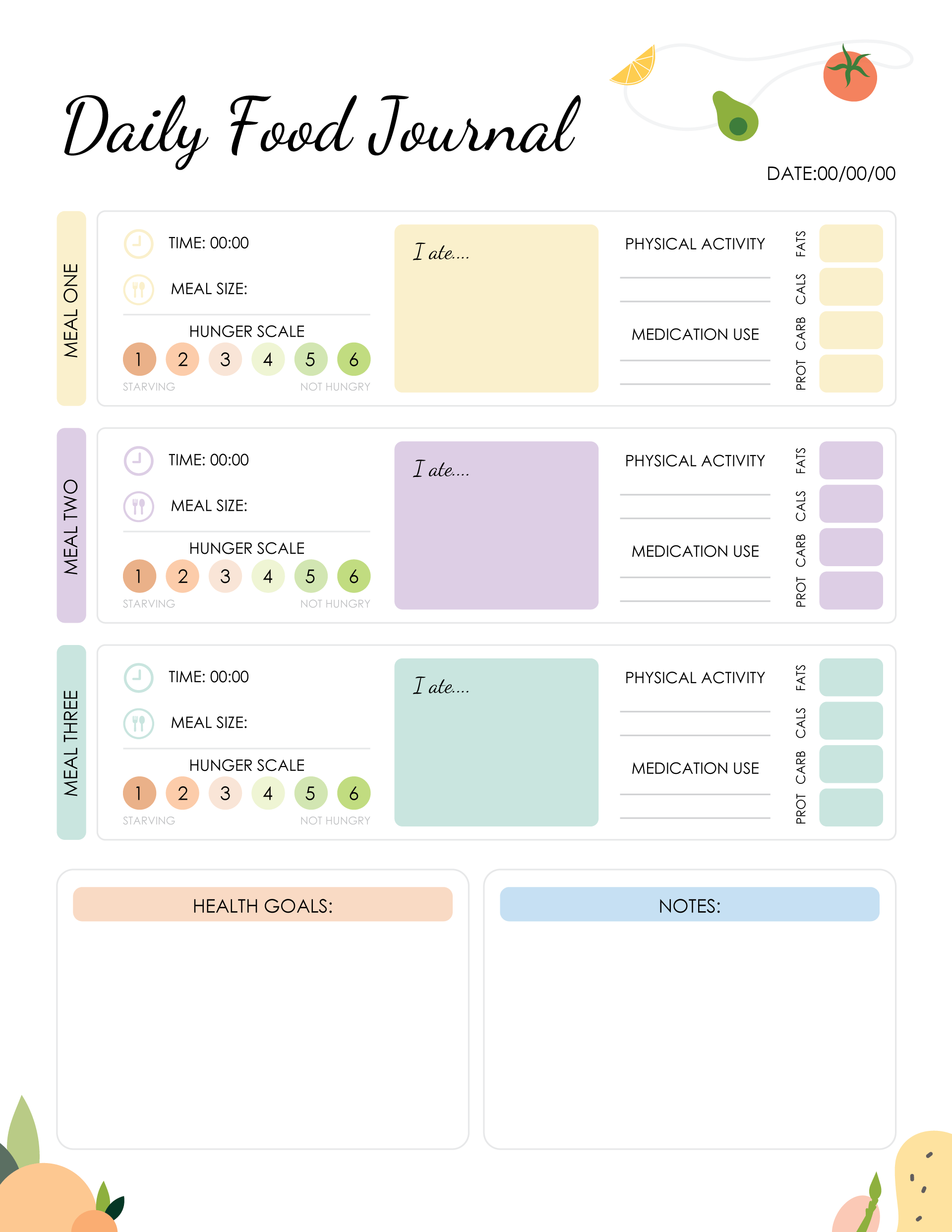
As its name suggests, it is your friendly tool for tracking your daily eating and drinking habits. The template provided below has sections for writing your daily meals, physical activities, medications, and nutrient intake. You can also write your health goals, which may include staying hydrated, taking proteins, avoiding excessive sugar, maintaining a nourishing meal, and more, based on your needs.
It is simple to use and track a daily journal of food because whatever you consume throughout the day, you can write it down and check it at night. It enhances accountability and creates an eating discipline in you.
A notes section for writing any reminders, modifications in eating habits, or any motivational quotes to keep you moving and dedicated to your goals is provided. You can also set your meal times and sizes to maintain a balanced diet routine.
Daily Food Log
Daily Food Log
Food Journal Template for Weekly Logs
Keeping track and a record of your seven-day’ eating habits is made easy with this template. It provides you with an overview of what you eat and drink within a seven-day calendar so that you can know exactly when you did a cheat meal or a cheat day, so you can accommodate it in the coming days. If you really can’t avoid cheat meals, keep in mind to only have cheat meals, at times when you’re not too hungry to avoid overeating.
The benefit of keeping a weekly food journal template is that when you successfully achieve the target of weekly nutrient intake, you can have small celebrations to acknowledge your struggle. But remember to opt for a salad instead of fries or drink more water. Such small celebrations keep you motivated to achieve your health goals.
Weekly Food Log

Weekly Food Log
Who Should Use These Templates?
Anyone willing to keep track of their eating and drinking habits for a week can use these food diary templates. People who want to lose weight, sportsmen monitoring their nutrition, anyone with dietary restrictions, or a person who desires to develop healthy habits in eating can use it.
Best Practices to Use the Food Diary Templates
Here are some best practices for using food diary templates:
- Be consistent in writing down your food and drink intake, it is easier when you keep the template in print format. If you consistently record your edibles, it will provide a clearer picture and help you get closer to your health goals.
- Be honest to yourself by listing every small thing you eat or drink, even snacks. It will provide a more realistic picture of your nutritional intake.
- Make sure to write the specific details of the food and beverages that you consume using measurable, such as grams, ounces, and cups. It will assist you in knowing the portion sizes and the calorie intake.
- Reviewing and reflecting on your food intake at regular intervals from the food journal can assist you in controlling and properly assessing your eating habits.
- Consider seeking advice or support from a dietician or nutritionist if you are facing any food allergies or frequent triggers.
- The templates can be kept in the pocket because of their small sizes. It makes them more accessible and handy. Anytime and anywhere, you can take it out of your pocket and write down what you eat and drink.
- If you don’t like to use the paper version of it, you can keep the Google Docs version on your mobile phone so that you can use it even within your office.
- It also allows you to note down the physical activities you perform helping you to document the calories you burn and the nutrients (proteins, carbohydrates, calories, and fats) you intake.
- If you take any medications, write them in the provided section. It serves as a reminder for your important medications.
Closing Thoughts
Documenting your eating and drinking habits can help you achieve your health goals. Everyone wants to be the better version of themselves, and it’s not possible without controlling their eating habits. Keeping track of what we eat and drink throughout the day can keep us aware of ourselves. So, using the food journal templates brings us closer to our goal of maintaining a healthier and happier body.


